Participants
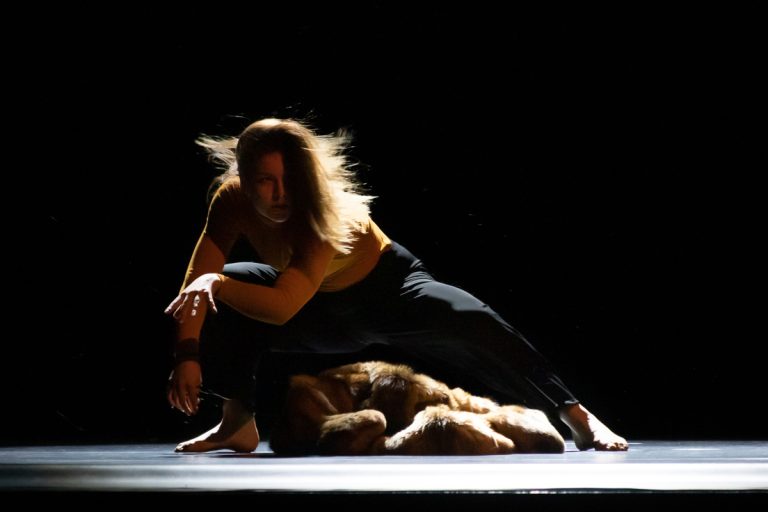
At this year's edition of SHARE festival following schools will participate...
Anton Bruckner Privatuniversität Linz (Austria)
The Anton Bruckner Private University is an open, innovative centre for the arts, where the performers and teachers of tomorrow receive an individualized education in music, drama, and dance. As one of the seven Austrian universities for music and drama, and one of the four universities in Linz, the UNESCO City of Media Arts, the Bruckner University sees its role both as a training ground for performing, teaching and academic research, and as an important agent in the development and communication of the arts.
The cultural landscape of Upper Austria sets an example in music education all over Europe. The Upper Austrian Provincial Government gives particular support to artistic education, which is why – compared with similar institutions – tuition fees here are extremely moderate. Culture characterises Upper Austria – a discussion process about our cultural model has developed a framework for future targets in cultural policy. We have taken the opportunity to be involved in this debate.
Dance Department of University of Goce Delchev North Macedonia (North Macedonia)
The Department of Contemporary Dance at UGD, headed by the Dean and Full-time professor, PhD, Risima Risimkin, opened in September 2017 as part of the Film Academy. This program was adopted in Macedonia through the Interart Cultural Center, which in 2008 signed a Memorandum of Understanding with the Rotterdam Dance Academy at CODARTS University in Rotterdam, the Netherlands. The expertise was undertaken for a period of three years, from 2010 to 2013, with the support of the Embassy of the Kingdom of the Netherlands in the Republic of Macedonia. This program is unique in Macedonia and in the region, after the determination to produce contemporary dancers.
The students of the Department of Dance at UGD could practice in the Skopje Dance Theatre, which gives them the opportunity to upgrade and perform in professional productions and guest appearances at prestigious festivals around the world. The program is based on a three-year first cycle of studies, for which students receive a diploma – a graduate contemporary dancer and 180 credits.
After completing the first cycle, students can continue their education in the second cycle of teaching on study programs of Master of Arts in Contemporary Dance Choreography & Master of Arts in Contemporary Dance Education (methodology and pedagogy) in English. During the years, the students had the opportunity through practice in Skopje dance theatre to perform in Beijing & Quanzho, China; The Holland Dance Festival in The Hague, ITS festival, Amsterdam & “Open stage program), Rotterdam & The Hague, the Netherlands; Battery Dance Festival in New York, USA; “Share festival”, Bratislava, Slovakia; National Theatre of Contemporary Dance Chaillot in Paris, France.
Duncan Centre Conservatory Prague (Czech Republic)
Conservatory was placed within the network of State Schools of the Czech Republic’s Ministry of Education, Youth and Physical Education.
The foundation of the Conservatory created space for a part of our culture which had long been ignore – the space for contemporary stage dance and dance theatre. This is currently the only state school in the Czech Republic systematically orientated towards education in this sphere.
The educational programme at the Duncan Centre Conservatory is designed so that its graduates will be able to find their places as professionals in the contemporary danced field. The Duncan Centre Conservatory graduates, according to their specialization, can work as affective dance artist, choreographers, dance teachers and art – therapists. The aim of the Conservatory is to produce universal artists.
The content of the education therefore enables students to continue, after their leaving exams, in studies of art, human sciences or pedagogy at university. Apart from the permanent faculty of teachers, important world dancers and dance choreographers are invited to organise workshops. We would like our students to have the possibilities of the broadest confrontation and cooperation with interesting and stimulating personalities from the field of contemporary dance. Students of the Conservatory have had a possibility to cooperate with, for example, the following personalities: Omar Carrum (MEX), Teri Weikel (USA), Elia Lopez (ES), Becky Brown (USA), Vladimir Rodriguez (CO), Marco Torrice (IT).
Department of Dance, Academy of Performing Arts in Prague (Czech Republic)
The Department of Dance was founded as part of the Academy of Performing Arts in Prague on 24 October 1945 by Decree of President Edvard Beneš 127/1945 Coll. Its founder was Professor Jan Reimoser, an important dance theoretician and critic. The first students entered the studio in 1949. Up until 1960, the Department of Dance belonged under the Theatre Faculty, then it became part of the Music Faculty, which in 2010 was renamed the Music and Dance Faculty. The field of mime choreography was created under the Department of Dance, forming the basis for today’s Department of Mime at HAMU.
The department originally provided a four-year education in the fields of dance pedagogy, choreography and dance theory, and briefly also in the field of dance interpretation. Starting in 1993 it switched to a three-level system of instruction comprising a bachelor’s (3 years), follow-up master’s (2 years) and doctoral (3 years) level of study. In the years 1968–1993, it was possible to study a five-semester course intended primarily for teachers of dance at art schools, which were followed by similar lifelong learning programmes.
Significant figures have stood at the head of the Department of Dance, such as Jan Reimoser, Božena Brodská, Astrid Štúrová, Vladimír Vašut, Ivanka Kubicová and Helena Kazárová. The department is currently headed by Václav Janeček.
Honorary doctorates have been awarded at the AMU Music and Dance Faculty to: Jiří Kylián, important Czech choreographer, founder of the Kylián Dance Centre and Video Library (15 December 2000) and His Majesty Norodom Sihamoni, the King of Cambodia, graduate of the field of Dance Pedagogy at the Department of Dance (19 March 2010).
Department of Dance, Academy of Performing Arts in Bratislava (Slovakia)
The Department of Dance provides undergraduate, graduate, and postgraduate education in dance as the only one in Slovak republic.
We offer following undergraduate programmes in Choreography (basic knowledge and skills in choreography) and Dance (with students specialising in classical, folk or modern dance or dance for children and youth).
Classical Dance is based mainly on the Russian school. Folk dance focuses on different folklore regions in Slovakia. Modern dance includes teaching the techniques of jazz dance, techniques of M. Graham, J. Limón, M. Cunningham as well as contemporary dance. Dance for children and youth prepares specialists with knowledge and skills in children dance teaching.
We also offer undergraduate programme in Dance Theatre and Performance – the programme focuses on developing technical and creative skills, preparing graduates who can be performers, as well as authors, or co-authors of dance, theatre, and multimedia productions.
We offer following graduate masters programmes: Choreography – with two principal study areas: choreography of ballet, including classical dance, as well as modern and contemporary dance techniques and Dance – with four principal study areas: classical dance, folk dance, modern dance, and dance for children and youth.
Students of both bachelors and masters dance programmes have an opportunity to include a Further Education Programme into their studies. This programme together with the completed degree programmes provides dance education qualification for primary art schools and conservatoires. Dance education programme in a part-time form is also available undergraduate and graduate courses. Department of Dance also offers postgraduate courses.
Latvian Academy of Culture Riga (Latvia)
The origins of the Latvian Academy of Culture are closely related to the spirit of freedom and cultural renaissance that prevailed in Latvia at the time. It was founded on December 29, 1990, and since then has continued to make a great contribution to the development of cultural and artistic research, performing arts (theatre and dance), film and audio-visual arts, cultural and creative industries both in Latvia and internationally.
At the moment there are about 500 emerging professionals of the cultural field enrolled in various study sub-programmes offered by the Latvian Academy of Culture. The Latvian Academy of Culture is a small yet an extremely open and welcoming higher education institution and that is one of the biggest assets in favour of choosing to study here. What sets us apart is our willingness to organise communication in studies, research, and life of our community in a very warm and personal way.
Dance and Movement Department at Lithuanian Academy of Music and Theatre (Lithuania)
The Lithuanian Academy of Music and Theatre (LMTA) is an internationally recognised higher education institution which trains artists for a professional career in music, theatre, dance, and film and offers related theoretical studies. Founded in 1933, the Academy currently hosts about 1 000 students in three study cycles – Bachelor’s, Master’s and Doctoral – in its three faculties, two of which are based in Vilnius, one in Klaipėda.
Department of Dance and Movement at LMTA – Lithuanian Academy of Music and Theatre was established in 2003, and for almost 2 decades it fostered education for contemporary and classical dancers and choreographers in Lithuania. At the moment the department consists of two programmes: Bachelor in Dance, Master in Art Therapy/Movement and Dance Therapy (joined programme together with Vilnius University). Bachelor in Dance programme focuses on developing two sovereign and practice-based specializations in contemporary or classical dance arts. Optional pedagogical studies provide dance teachers qualification.
Musik und Kunst Privatuniversität der Stadt Wien (Austria)
The Study Programme Dance will provide world-class training in performance dance and dance education. With new and redefined programmes, the Study Programme Dance reflects the diversity of the professional environment that awaits dancers and dance instructors alike.
Throughout their study of arts and arts education students learn to face the challenges a dynamic and fast evolving profession provides. Alongside establishing fundamental dancing, creative and educational skills, the programme also focuses on body awareness methods, theoretic foundations and science and research: this ample approach is designed to promote a self-reflective understanding of the art form of dance.
Other major priorities are the promotion of interdisciplinary awareness, a project based work concept and practical courses/ traineeships in dance and dance education that are organised in collaboration with external partners. Thanks to the implementation of elective-compulsory modules the new curricula leave room for individual specialisation.
The Study Programme Dance represents a wider understanding of dance, where a creative approach to addressing conflict between tradition and innovation provides the basis on which new models of communicating dance education can be provided. The MUK University has worked with several partner universities within the European higher Education Area and aims to intensify relations in the years to come so that students can benefit from attractive study offers abroad (Erasmus exchange programme).