Department of Theatre Studies
The study of theatre theory has been integral to the curriculum at the Theatre Faculty since the very beginning. Over time, the department has undergone various name changes and developments. Initially, dramaturgy was also part of the Department of Theatre Theory, but after it split off, the department was renamed to the Department of Theatre Science. In the late 1970s, it expanded to include film, leading to the creation of the Department of Theatre and Film Science.
In 1986, the department at the Academy of Performing Arts was abolished and transferred to the Faculty of Philosophy at Comenius University. However, it was quickly re-established during the 1987/88 academic year under the name of the Department of Theory and History of Dramatic Arts. Further changes and new accreditation processes led to several more name changes, including the Department of Theatre Science, the Department of Theory and Criticism of Theatre Art, and finally, the current Department of Theatre Studies.
The department’s program aims to provide students with a comprehensive understanding of historical and contemporary trends in theatre. An important aspect of the program is its connection with other disciplines in the humanities, such as literature, visual arts, music, philosophy, sociology, psychology and cultural studies. Throughout your studies, you will gain knowledge of the processes of artistic creation, the organization of theatrical life, theatre theory, history, criticism, and documentation.
At the Department of Theatre Studies, you will study in small groups within individualized education. You will regularly attend theatre performances and festivals, publish reflections in the school magazine, and engage in discussions about theatre across various platforms. You will also have the chance to participate in foreign study programs and work with renowned theatre practitioners and scholars in theatre institutions.
Graduates of the department find employment primarily in cultural journalism, theatre criticism, history, and media publishing. You can also pursue careers in organizing cultural and educational events, or work in PR and marketing, documentation centres, memory institutions or non-profit organizations. Creative professions, such as dramaturgy, are also a potential path.
Lectures, Conferences and Publications
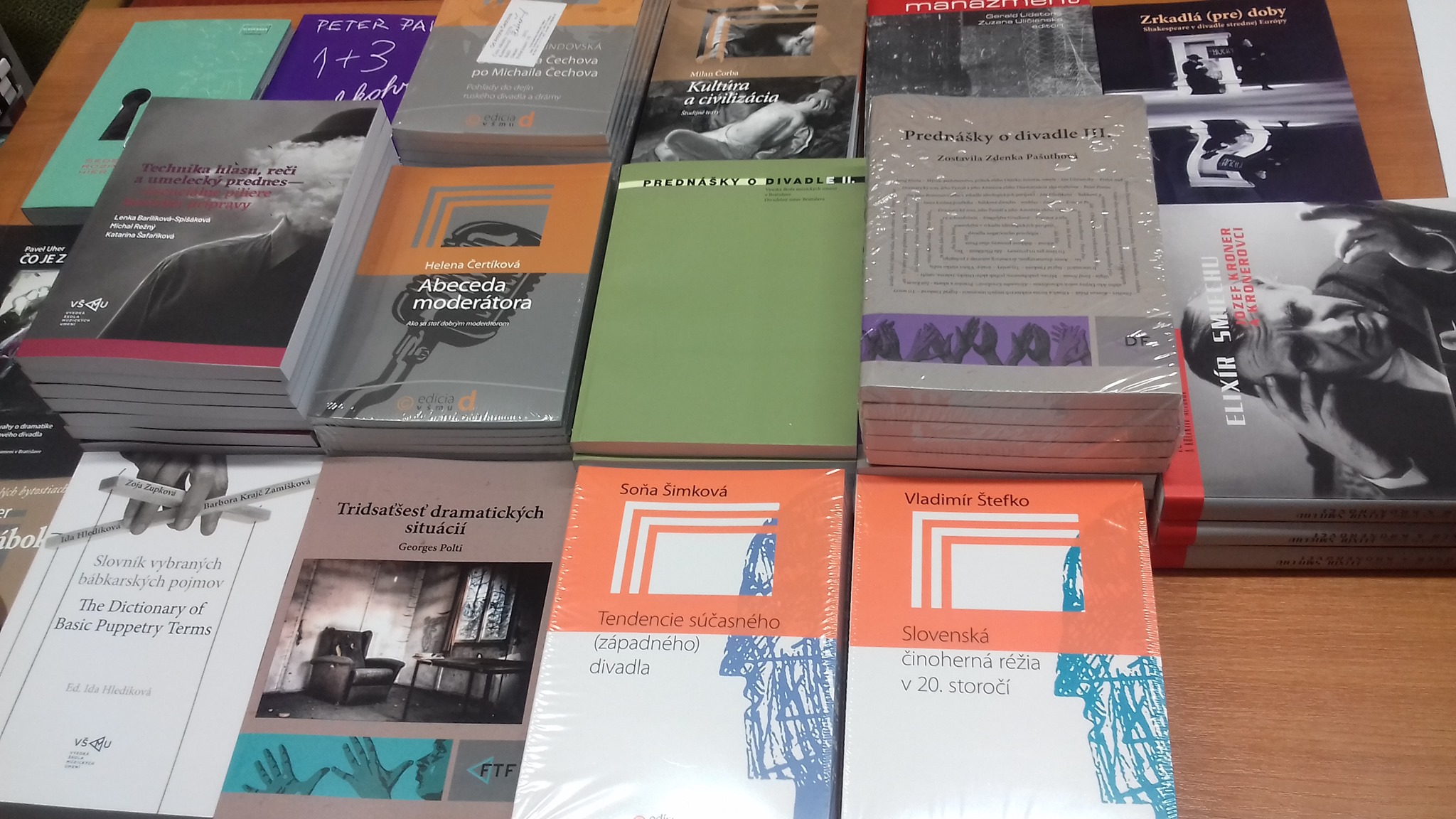
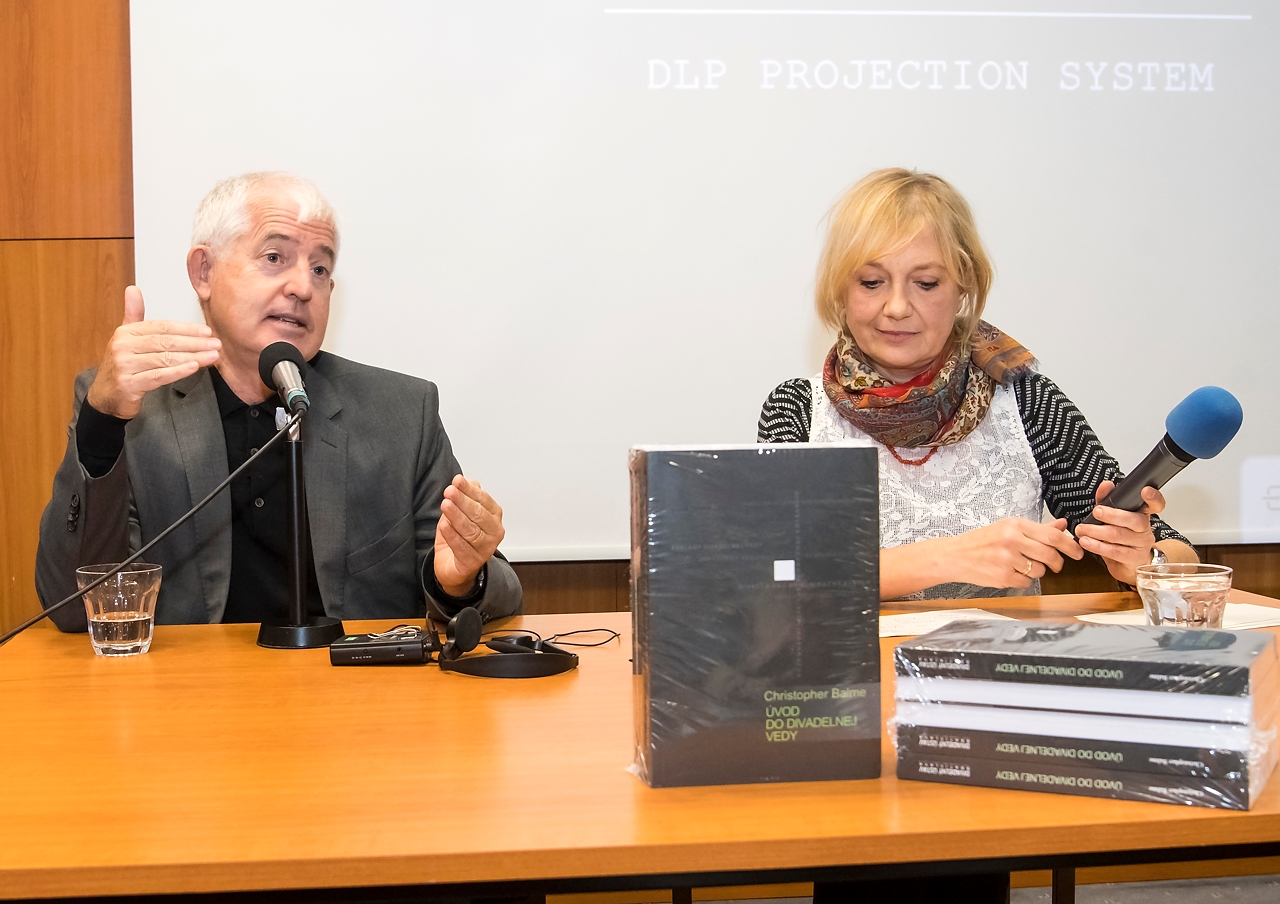
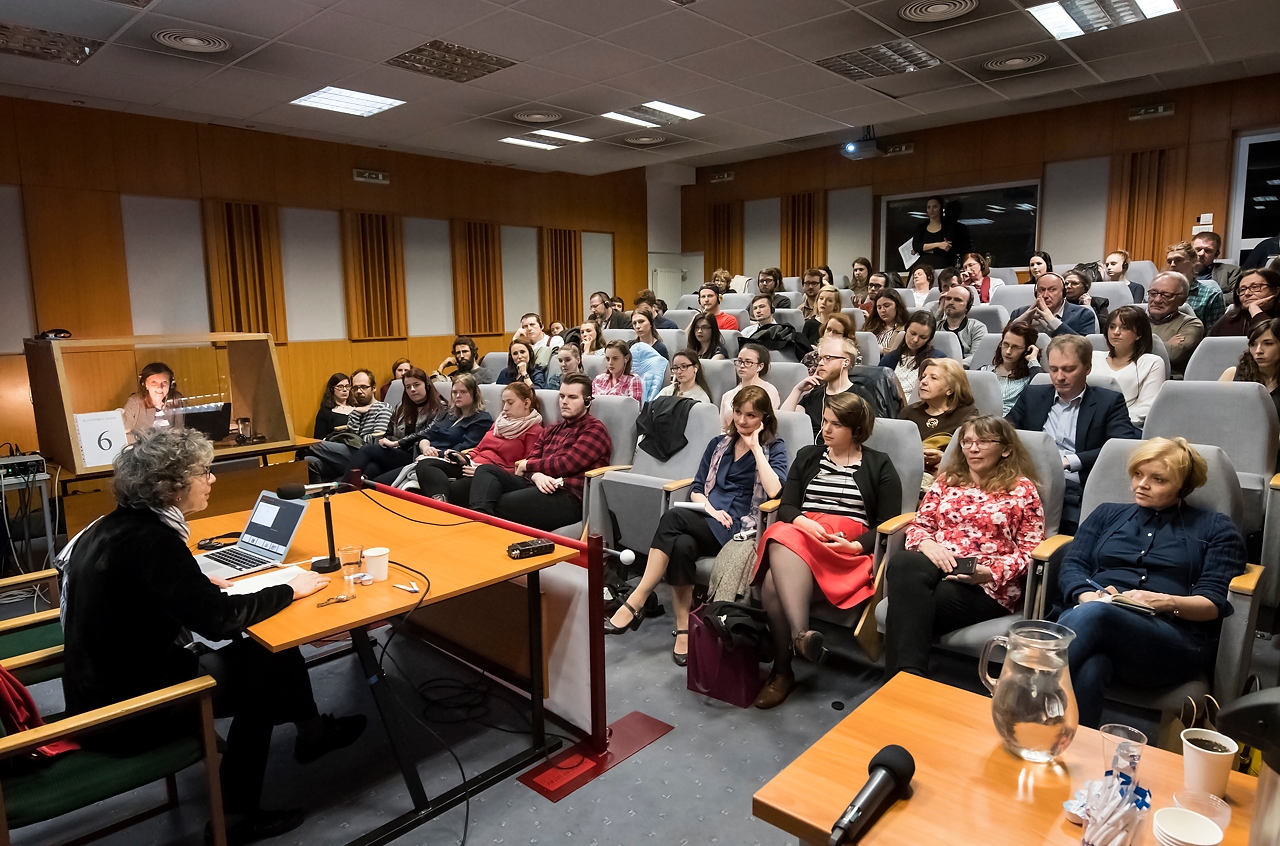
In addition to lectures, seminars, and workshops led by top faculty members, you will have numerous opportunities to meet renowned international figures. Guest lectures and masterclasses are often held in school or at the Bratislava Theatre Institute and the Slovak Academy of Sciences. Faculty members of the Department of Theatre Studies also organize and participate in conferences and colloquiums, in which you will be able to take part as a listener. Research is another important part of the department’s work, with outcomes including collections and monographs on various theatre-related topics.
Festivals
As a student of the Department of Theatre Studies, you will have the chance to participate in both Slovak and international theatre festivals, which will broaden your experience. These include domestic festivals such as Divadelná Nitra, Nová dráma/New Drama, and Dotyky a spojenia in Martin. You can also attend Czech festivals like Ost-ra-var, Divadelní Flora Olomouc, and student festivals such as Setkání/Encounter in Brno and Zlomvaz in Prague. Participation may involve creating festival journals, joining discussion platforms, or enhancing your skills in workshops and criticism seminars.
Reflektor Magazine
You can gain practical experience in theatre criticism by contributing to the faculty’s theatre magazine, Reflektor. The magazine is produced through the dedicated course and includes reflections on school productions, as well as performances from other theatres in Slovakia and abroad. It also features festival reports, interviews with theatre professionals, and contributions from young literary talents. In addition, the Reflektor editorial team organizes informal discussions on school productions under the name “critical brunch”.
Teachers
Doctoral students
- Mgr. Dominika Dudášová
Study plans and admission procedure
The Department of Theatre Studies currently provides education in the following study plans within the accredited study program Theory of Theatre, Film and Music:
- Theatre studies [Bc.]
- Theatre studies [Mgr.]
- Theory of Theatre, Film and Music [PhD.]
The requirements for applicants and information on the dates and process of the entrance exams are published on the pages of the study plans offered by the Department of Theatre Studies.
All study plans are available only in the Slovak language.
Projects of the Department
-
Slovak Theatre and Chekhov
Subtitle: A set of interpretative approaches by Slovak theatre artists to staging the work of a world playwright
KEGA 2021 – 2023 project (011VŠMU-4/2021): Playwright A. P. Chekhov is one of the world’s most famous and staged playwrights, his work influenced the development of theatre art in the world and in Slovakia. The project is focused on researching the interpretation of Chekhov’s plays in Slovak theatre at the end of the 20th century and the beginning of the 21st century. It summarizes and reflects the experiences of important personalities of our culture and performing arts in the field of acting, directing, dramaturgy and stage design. It shows the set of creative methods and the originality of the Slovak contribution to the development of staging forms of Chekhov’s dramatic heritage.
Catalog for the exhibition “Affairs with Chekhov”
The main researcher of the project: Prof. PhDr. Nadežda Lindovská, PhD.
-
Innovation of documentary practice
Subtitle: Reconstruction and digitization of the Academy of Performing Arts productions after 2000
The KEGA 2022 – 2024 project (003VŠMU-4/2022): The project focuses on the innovation of the content of subjects aimed at acquiring basic skills in the field of professional documentation (collection, evidence, storage and analysis) and subsequent scientific research of stage creation. The innovative content of the subjects will enable the revitalization and digititalization of the preserved collections of materials for the productions of the Lab Theatre, the Opera Studio and dance productions of the Academy, and at the same time build new, expertly processed collections. The basic outputs of the project will be to make information available to experts and general public in the form of additions to relevant information databases and popularization-scientific events (exhibitions, staged lectures, staged readings).
The leader of the project: doc. Mgr. art. Zdenka Pashuthová, ArtD.
-
Innovative methods and contents of the teaching of the whole faculty compulsory and state-exam subject of the history of world theatre
Subtitle: using digital technologies and new media from the perspective of transcultural contexts and exchange processes
The KEGA 2022 – 2024 project (001VŠMU-4/2022): The project is focused on innovative and digitalized forms and contents of teaching the world theatre history, a compulsory bachelor’s-level subject for all students of the Theatre Faculty, with special attention to combined and distance learning methods .
The main researcher of the project: Prof. PhDr. Jana Wild, PhD.
-
Crossing Borders with Shakespeare since 1945: Central and Eastern European Roots and Routes
International Visegrad Fund (IVF) project 6/2022 – 12/2023 (Project code 22210007). Project holder: Faculty of Arts, Masaryk University, Brno.
Drawing on the achievements of the previous VF grant (Shakespeare in Central Europe after 1989: common heritage and regional identity), this project aims at mapping how Shakespeare has crossed cultural, political, social borders across Central and Eastern Europe and beyond, since the division of Europe in 1945. We are now interested in elucidating the complex aesthetic and ideological negotiations which take place when Shakespeare’s plays produced in this region travel to new or renewed destinations, in scripting the dialogue between media, genres, formats, culture and critical discourses.
Co-investigator of the project: Prof. PhDr. Jana Wild, PhD.
Contacts
Address:
Zochova 1
Mgr. Ján Šimko, PhD.
head of the department
JAN.SIMKO@vsmu.sk
02 2100 6404, kl. 404
Zochova – miestnosť 319
Mgr. art. Alžbeta Vakulová
secretary of the department
AVAKULOVA1@vsmu.sk
02 2100 6404, kl. 404
Zochova – miestnosť 319
Mgr. art. Martina Mašlárová, PhD.
study counsellor
MARTIna.mASLARova@vsmu.sk
02 2100 6404, kl. 404
Zochova – miestnosť 319